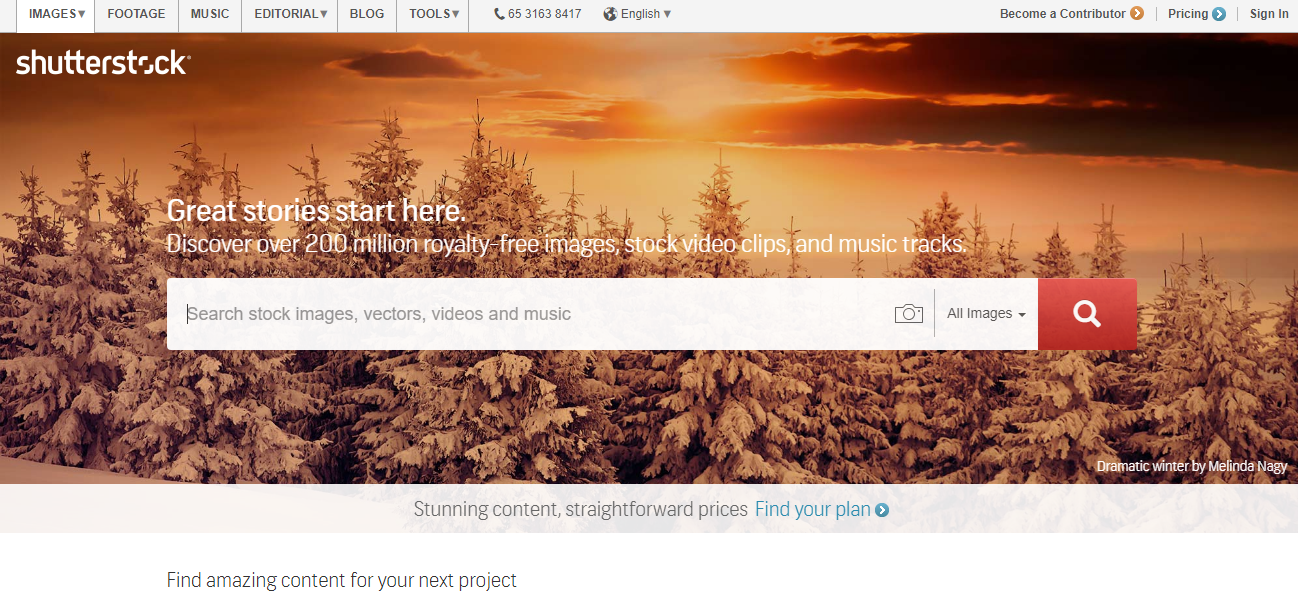
Shutterstock is one of the largest stock photo agencies in the market. With over 90 million stock files in the library, many creative professionals usually find what they are looking for. If you want to purchase cheap stock footage for your creative project, there’s are a real chance that you will find what you need in the stock site as well. It has over 5 million stunning video clips that are available at straightforward prices.
Prices
Shutterstock offers cheap stock footage at great prices. You can download a single royalty-free clip for as low as $19 per video, depending on your needs. We recommend purchasing video clips according to your needs to avoid extra costs. For instance, you do not have to pay for 4K videos if you only need the video for web purposes and you are certain that you won’t be using it in another way. Prices of stock footage are as follows:
- $19 for Web
- $49 for Standard Definition
- $79 for High Definition
- $199 for 4K
If you have a regular cheap stock footage needs, we recommend purchasing a video pack to save more. You can choose the pack that suits your creative needs.
- Web. When you purchase a video pack for web purposes, you can save $16 with 5 clips, $41 with 10 clips, and $126 with 25 clips.
- Standard Definition. For SD clips, you can save $16 with 5 clips, $51 with 10 clips, and $226 clips with 25 clips.
- High Definition. High definition cheap stock footage in packs offer great savings starting at $26 for 5 clips. You can enjoy more savings when you purchase larger packs – $91 and $276 for 10 and 25 video clips respectively.
- 4K. Enjoy greater savings with 4K cheap stock footage starting at $66 for 5 video clips. You can increase your saving when you purchase 10 and 25 video packs.
Videos purchased in packs must be downloaded within 365 days of purchase. They all fall under the Standard License agreement.
Why use Shutterstock to purchase cheap stock footage?
Aside from the huge collection of stock footage, Shutterstock also offers one of the least expensive video clips in the market. It also offers additional savings through video packs and coupon codes. Furthermore, you can download unlimited video packs at a time. You can have 3 active SD packs at one time and choose which pack you will use to download your videos in the cart. You also have the option to auto-renew your packs. For uninterrupted service, we recommend turning on the auto-renew setting.
With over 5 million cheap stock footage, Shutterstock offers one of the most varied collections in the market. What’s greater is you can download these stunning content at straightforward prices.